
The Real Osceola County Arrest Log
Osceola County has no official weekly booking feed. The Sheriff publishes no multi-day jail blotter either. Its Sheriff's Department page describes jail inmate processing at 325 W. Upton. Beyond that, it offers no archive, roster, or booking table. There is no stated publication schedule and no photo policy. Newspapers fill the gap with selected agency activity. That makes their stories editorial choices, bound by date. They can report an arrest, a warrant service, or a lodging at the Osceola County Jail. They can also include crashes, complaints, and property calls where nobody was arrested.
Which Blotters Cover Osceola Arrests?
Start with official agency records. For real custody or a booking document, call the Sheriff at 231-832-2288 or file the county FOIA form. The news sources below serve as dated examples only.
| Publisher and window | What the item provides | Limit |
|---|---|---|
| Big Rapids News / Pioneer, June 22–28, 2026 | Regional narratives for Osceola, Mecosta, and Lake counties, with dates, approximate times, and selected agency action. | The story expressly says not all calls may be reported. It is not a roster or photo feed. |
| Big Rapids Daily News, Evart 8/8–8/13 window | Incident narratives, warrant-arrest references, and county-jail lodging details. | An episodic publication, not proof of a routine weekly series or complete bookings. |
| Manistee News, later Evart police log | A limited multi-day set including an arrest described as lodged at 325 W. Upton. | Selected news reporting cannot establish present custody. |
| Big Rapids News, Reed City, Dec. 29, 2019–Jan. 4, 2020 | Historical day-by-day police activity with arrest and jail-lodging references. | Old context only, not a current log. |
Both dates matter in every blotter story. An article can run after its covered window closes, and an old report stays searchable long after release or court action.
How to Read the Osceola County Blotter
Read a news log as an index, not a final record. Work from the article's exact dates and its attribution.
- Confirm the jurisdiction. Make sure the story concerns Osceola County, Michigan, not Florida, Iowa, or another same-named county.
- Record the covered dates. Separate the incident window from the article’s publication date. Weekly-style headlines do not guarantee continuing weekly updates.
- Identify the agency. Note whether the narrative attributes action to the Sheriff, Reed City Police, Evart Police, or another department. That agency may hold the incident report.
- Separate incident from booking. A blotter item can describe a call without arrest. If it says someone was lodged at 325 W. Upton, the Sheriff is the official source for the jail record.
- Confirm status and outcome. Contact the Sheriff for custody, request an existing record for documentation, and use the court system for filed charges or disposition.
For very recent events, use the Daily Arrest Report. That path goes straight to Sheriff confirmation. Neither the news stories nor the county website form a reliable same-day list.
What an Arrest-Log Entry May Show
Newspaper formats vary, so no single field set applies. Treat the details below as narrative facts, not guaranteed database columns.
| Possible entry detail | How to interpret it |
|---|---|
| Incident date and approximate time | Places the reported activity within the article’s covered period. |
| Community or location | May identify Reed City, Evart, Tustin, a road, or another place without proving booking jurisdiction by itself. |
| Reporting agency | Points toward the office likely to hold the original incident record. |
| Selected narrative | Summarizes police activity and may omit facts, later corrections, or calls. |
| Arrest or warrant reference | Describes reported action, not guilt or final charges. |
| Jail lodging reference | Shows a reported transfer to Osceola County Jail at that time, not current custody today. |
| Photograph | Not a verified routine feature of these sources and not an official county photo policy. |
Names, charge descriptions, and custody statements still need checking. The relevant agency creates the controlling record. A newspaper summary may never be updated, so court outcomes belong elsewhere.
A Regional Blotter Is Not a County Roster
The June 22–28, 2026 Big Rapids News / Pioneer blotter mixes three counties. Its Osceola passages can point to reported activity. Still, the mixed geography demands careful reading. A named person is not always a county-jail detainee. An Osceola narrative may involve another place or agency that needs its own confirmation. The combined regional blotter shows the date-range format and the publisher's own incompleteness warning.
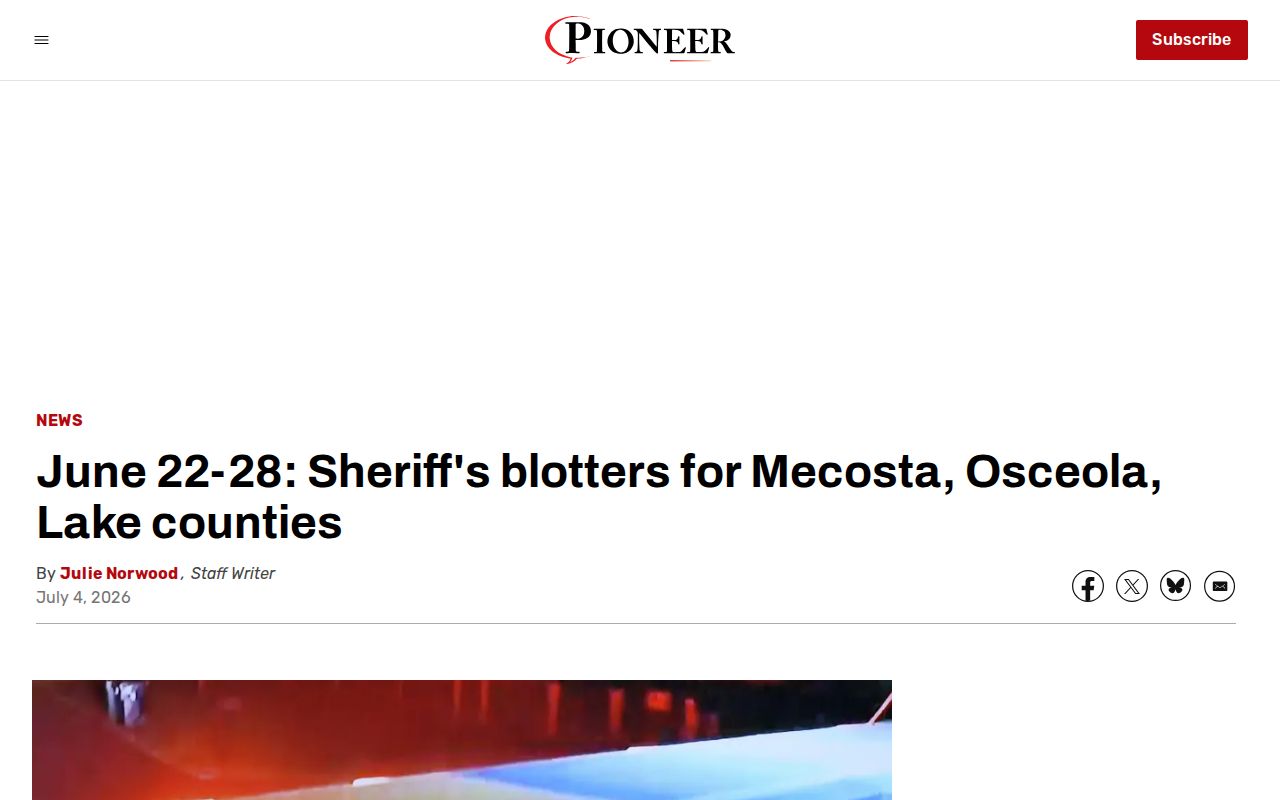
Recognizing the article is one thing. The Sheriff confirms bookings and custody. A weekly narrative can reveal patterns in what gets published, but it cannot support arrest totals or crime trends. Missing events, editorial choices, and combined counties make that math unsound.
Evart Arrest Narratives Across Several Days
Evart gives the clearest example. The Big Rapids Daily News ran a blotter with an 8/8–8/13 title range. It includes warrant-arrest and lodging references. A later Manistee News police log also picks selected incidents and notes a warrant arrest lodged at the county jail. Neither is an official jail roster. The Evart weekly blotter example shows how a dated police narrative differs from a booking database.
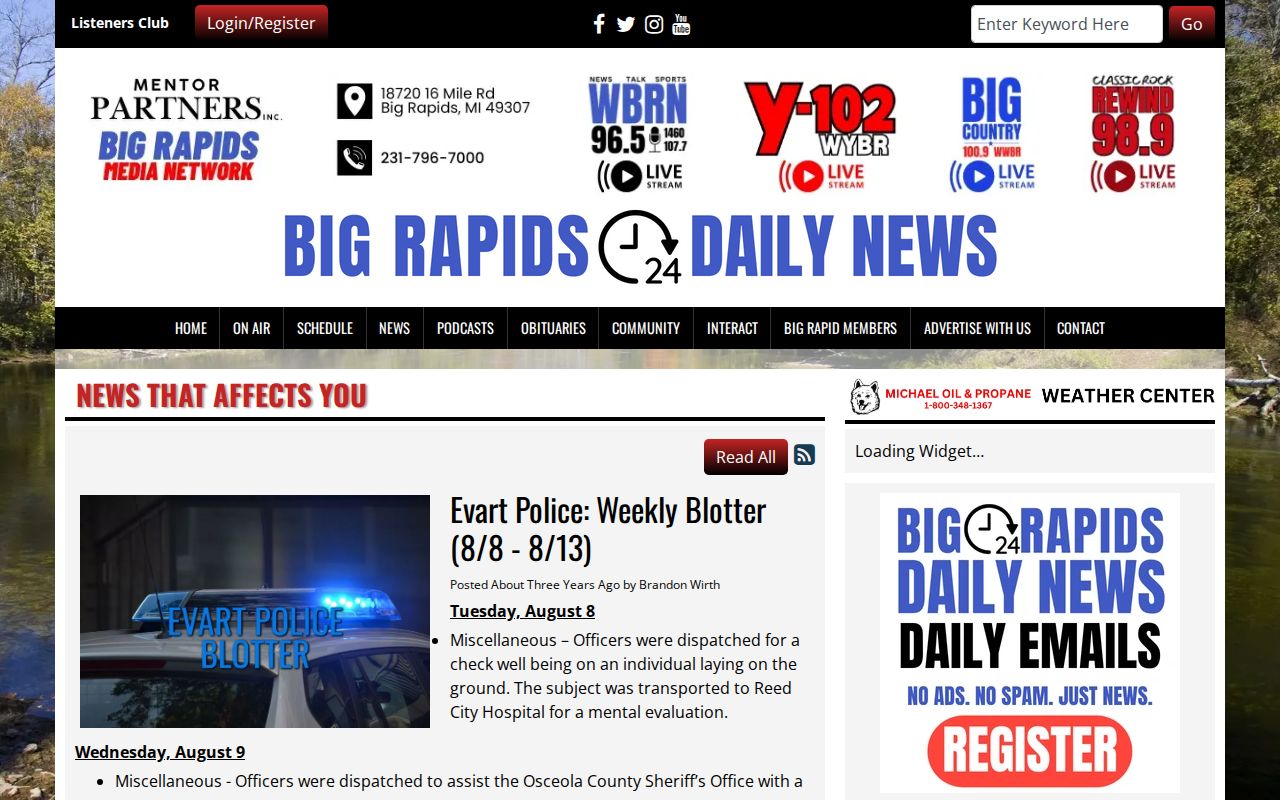
The article can flag an event worth investigating. Confirm details with the original police and jail records, or see the later Evart police log for another limited date-range example.
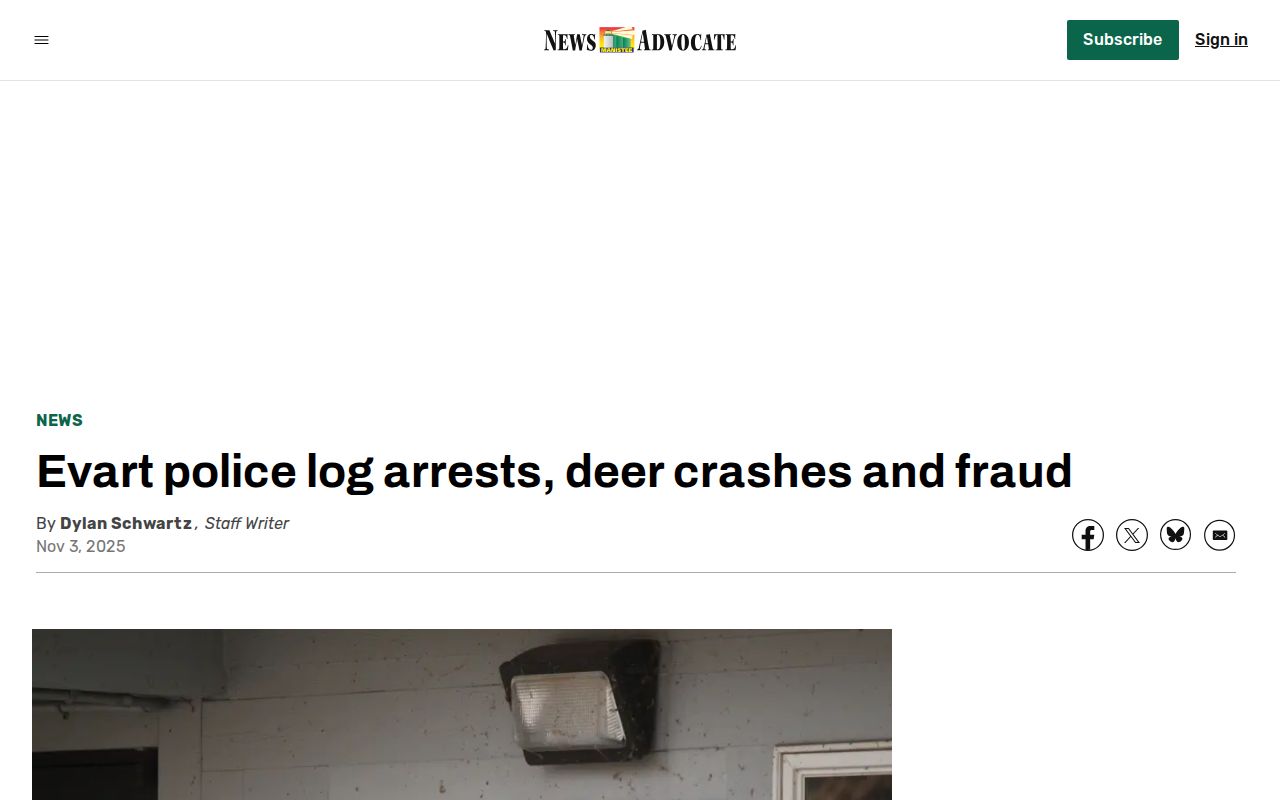
The Manistee log mixes many incident types. That mix is why a police log can never pass as a complete list of booked people.
Weekend Arrest Reports and Posting Gaps
A several-day article can catch incidents a one-day check would miss. Publishers often group material after a weekend. Still, no rule guarantees an official weekend surge, a holiday delay, or a fixed posting day for Osceola County. Never expect a complete weekend list every Monday. A missing blotter does not mean no arrests occurred. The publisher may not have received or selected an item. The agency may still hold an incident or booking record. An item reporting lodging also says little about later custody. Release, transfer, bond, and court action can follow fast. Check with the jail for current status.
Finding Arrest Records After the Log Ends
Old newspaper stories can linger online for years. That longevity is not a retention policy, though Michigan actually writes the rules down. General Schedule 11 governs jail records statewide. It keeps jail register and calendar information permanently. Inmate jackets and files usually get destroyed after the calendar year closes plus seven. Some records follow their own schedules. Retention also never promises that the public can see everything held. When you need more than a story covered, file the county's FOIA request form. Be specific. Name the person or event. Give a tight date range, and point to the agency most likely to hold the file. Ask plainly for a booking card, a jail register entry, or an incident report. Request a release record or a photograph, whichever fits your situation. Michigan FOIA gives agencies five business days to answer first. A ten-business-day extension is allowed. Fees and exemptions can still apply. Very old material may sit with archival custody or follow an agency disposition schedule. The Archives of Michigan county guides map out historical holdings. But they are not a live arrest search. Court records answer how a charge ended. To see every channel in one place, start at the Osceola County recent arrests hub. It sorts current custody, booking records, court cases, photos, and historical sources. That way a dated blotter is never mistaken for the final word.
Search Public Records
Sponsored Results